
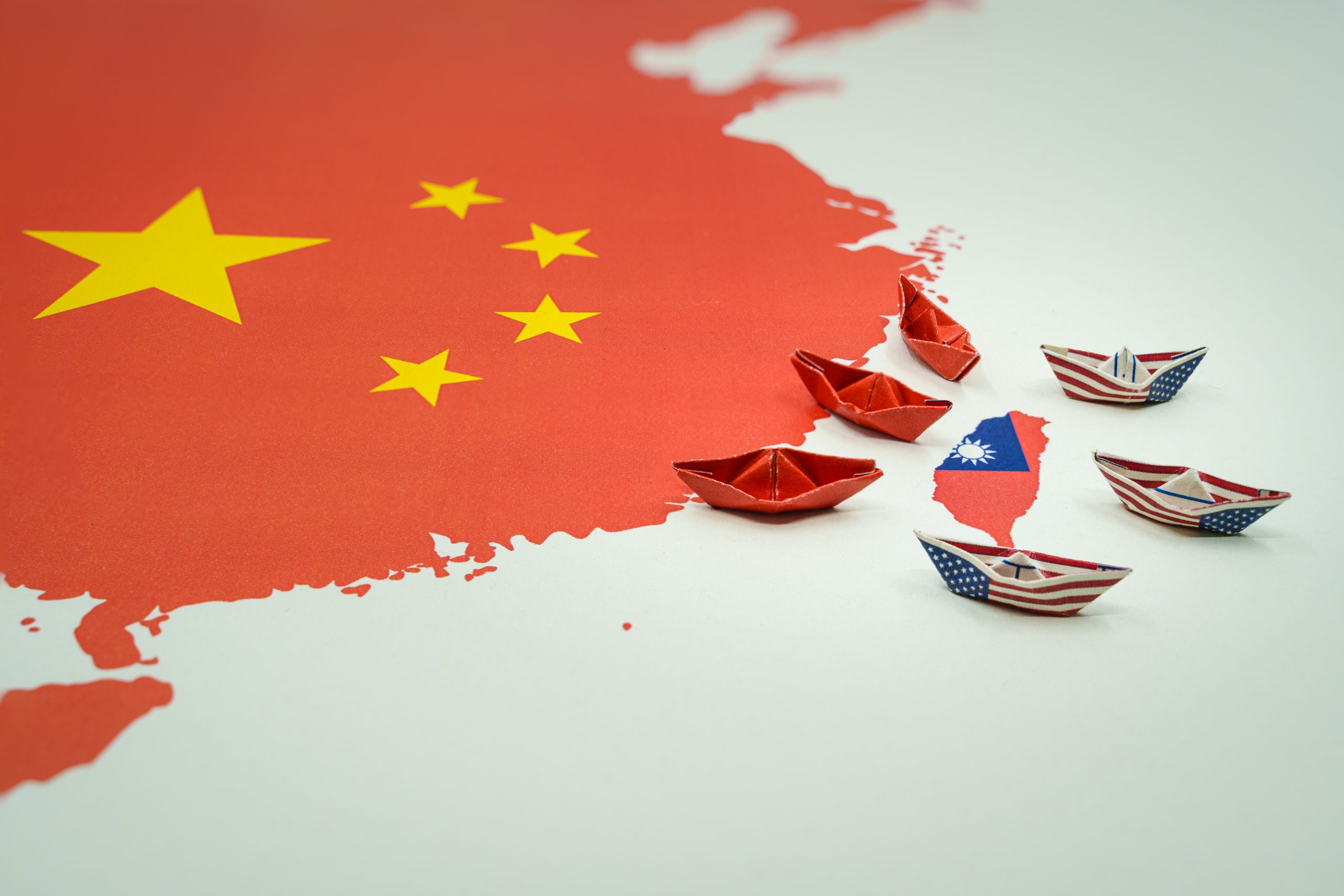
In a comprehensive address delivered on Sunday at a security summit in Singapore, where the intensity of regional tensions was on clear show, China’s new defence minister warned that those who back Taiwan’s gradual pursuit of independence will “end up in self-destruction.”
Adm. Dong Jun, the Minister of National Defence, made the remarks during a speech that lasted around thirty minutes. Beijing had just completed significant military drills encircling the island of Taiwan a few days prior, following the inauguration of its newly elected president last month.“We will take resolute actions to curb Taiwan independence and make sure such a plot never succeeds,” Dong said speaking through a translator, while slamming “external interfering forces” for selling arms and having “illegal official contacts” with Taiwan, in an apparent reference to the United States, which maintains close, unofficial ties with Taiwan.
“China stays committed to peaceful reunification. However, this prospect is increasingly being eroded by separatists for Taiwan independence and foreign forces,” Dong warned.
His comments come as there has been heightened concern in the region over Beijing’s military and economic intimidation of Taiwan, which has grown more pronounced under Chinese leader Xi Jinping.In a meeting with Dong on Friday, US defense chief Lloyd Austin called on China not to “use Taiwan’s political transition — part of a normal, routine democratic process — as a pretext for coercive measures.”
China’s ruling Communist Party claims the self-governing democracy as its own, despite never having controlled it and has vowed to “reunify” with it, by force if necessary. Taiwan’s new President Lai Ching-te and his party, the Democratic Progressive Party (DPP), are both openly loathed by Beijing for championing Taiwan’s sovereignty.Lai has said he favors the current status quo, proclaiming that “Taiwan is already an independent sovereign country” so there is “no plan or need” to declare independence. The US also by longstanding policy does not support Taiwan independence nor the unilateral change of the status quo across the Taiwan Strait.
“The DPP authorities in Taiwan are pursuing separation in an incremental way. They are bent on erasing their Chinese identity of Taiwan and severing social, historical and cultural links across the Taiwan Strait,” Dong said, reiterating Beijing’s rhetoric that they would be “nailed to the pillar of shame in history.”Polls show growing numbers of the island’s people – especially young people – view themselves as distinctly Taiwanese and have no desire to be part of China, an authoritarian one-party state compared to Taiwan’s democracy. Less than 10% now support an immediate or eventual unification, and only 3% identify primarily as Chinese – while 67% see themselves as primarily Taiwanese.
Dong, a former naval commander, is making his debut at the Shangri-la Dialogue security summit after being appointed to his position late last year following a surprise shake-up at the top of China’s Defense Ministry.The gathering plays out amid a contentious security landscape across the region, where China is widely seen by its neighbors as using its military might to assert disputed territorial claims and bid for military prominence in a part of the world where the US has deep security ties.
Chinese vessels and aircraft have been widely documented patrolling and making aggressive maneuvers against others operating in international waters and skies as it asserts disputed claims in the East and South China Seas.But Dong painted a different vision of China in his speech, framing it as a benign power whose military “never acts from the so-called position of strength,” while taking oblique aim at the US saying, “we will not allow anyone to bring geopolitical conflicts or any war, whether hot or cold to our region.”The Chinese defense chief also said there was a “limit to” China’s restraint when it comes to “provocations” in the South China Sea, making an apparent reference to US treaty ally the Philippines, which Dong did not name directly.
A “certain country” was “emboldened” by outside powers and had “made mediated provocations,” Dong said, while indirectly referencing the deployment of an American missile system during military drills in the Philippines in April.China has militarized islands in the disputed South China Sea, and in recent months its coast guard has fired water cannons and sought to counter Philippine vessels operating in disputed areas, further ratcheting tensions in the key strategic waterway.China claims historic rights to the bulk of the South China Sea, despite a 2016 ruling at an international tribunal in The Hague ruled in favor of the Philippines against that claim.
Source: Here
