
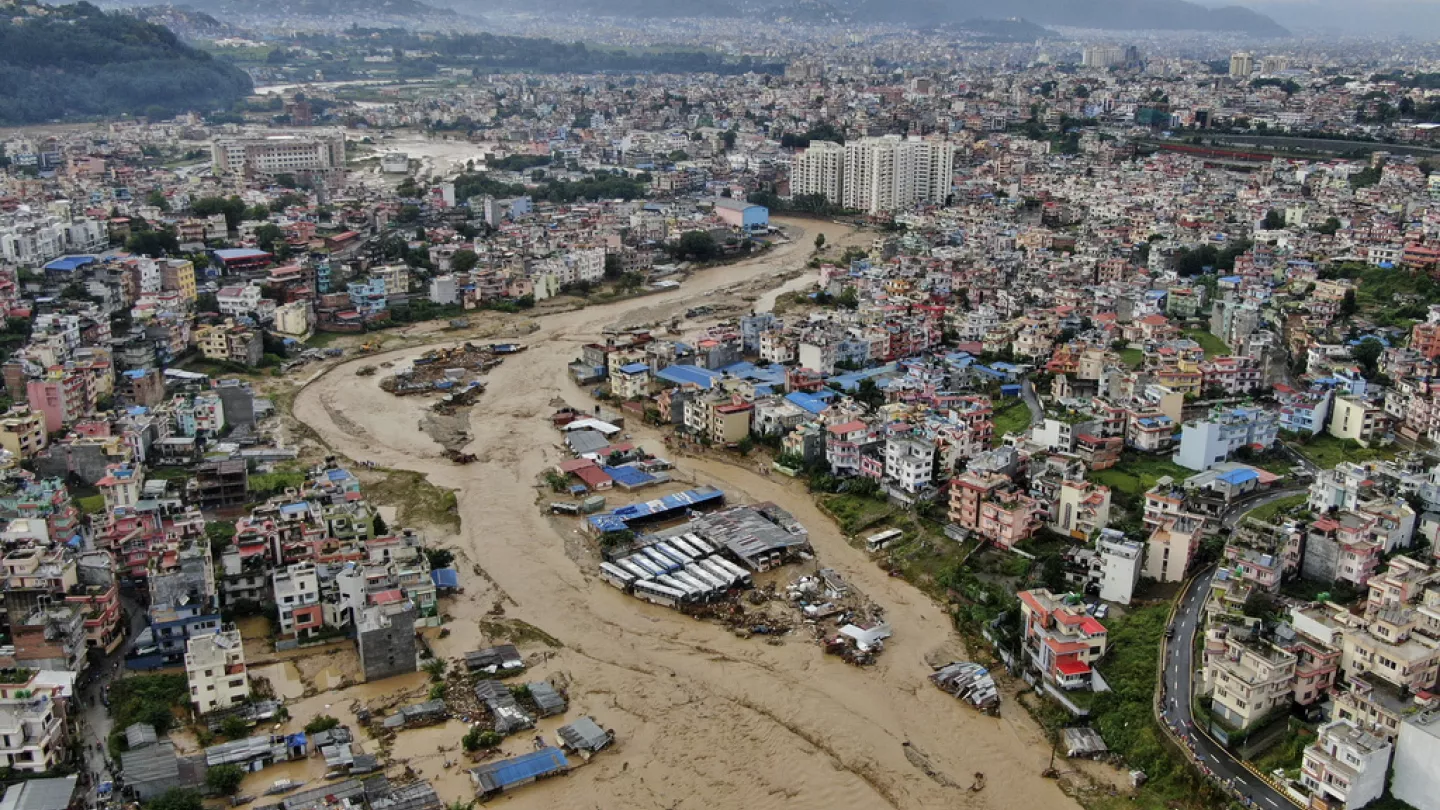
Given the extensive mortality and destruction caused by monsoon in different regions, Nepal is more vulnerable to epidemics of vector-borne, airborne, and water-borne diseases.
Experts have warned of a possible spike in illnesses in the upcoming days due to the fact that the majority of water sources have been tainted by rain and floodwater and that thousands of displaced people are staying in temporary shelters.
Chief of the Clinical Research Unit of Sukraraj Tropical and Infectious Disease Hospital Dr. Sher Bahadur Pun stated, “People are already getting infected with water-borne, vector-borne, and air-borne diseases.” “In the upcoming days, these issues could get worse.”At least 209 people have been confirmed dead, while 29 others are still missing due to the floods and landslides triggered by record-breaking torrential rainfall that started Thursday evening. Additionally, 142 people have sustained various degrees of injury, and more than 4,222 others have been taken to safe places, the Home Ministry said on Monday evening.
Doctors warn that the risk of water-borne, vector-borne and air-borne disease outbreaks increases in the aftermath of disasters. Nepal’s past experiences suggest the same. “People are already contracting cholera and other water-borne diseases,” said Dr Pun. “As displaced people mostly live in temporary shelters, the chances of spread of air-borne and vector-borne diseases remain high.”
At least 95 people from various districts, including from Kathmandu and Lalitpur, have tested positive for cholera since the start of the monsoon in June. The Vibrio cholera 01 Ogawa serotype has been confirmed in the stool samples of the infected patients. Thousands of others were also infected with diarrheal infections after the start of the monsoon season. Diarrhoeal disease is a common and seasonal public health issue, usually triggered by unsafe food and water or hygiene issues.
Likewise, six people died, and 12,644 others were hospitalised this year due to dengue, which has spread to 76 out of 77 districts across the country. Hundreds of people are contracting seasonal flu, but health authorities have no records of these cases. Officials at the Ministry of Health and Population said that they are bracing for tough days ahead, as the floodwaters not only contaminate drinking water sources but also create breeding grounds for various disease-spreading vectors.
“We expect a surge in water-borne, vector-borne and air-borne diseases in the coming days, as it takes a few days for these illnesses to incubate,” said Dr Yadu Chandra Ghimire, director at the Epidemiology and Disease Control Division. “We have alerted all agencies concerned to step up vigilance and prepare to deal with any adverse situations.” Public health experts have warned that healthcare facilities in the disaster-hit districts could witness an uptick in cases of viral fever cases and waterborne diseases—diarrhoea, dysentery, food poisoning—and snakebites.
Health Ministry officials say that they are aware of the risks and have directed agencies concerned to prepare accordingly. “We have stockpiled essential medicines in districts, provinces and at the central level,” said Dr Roshan Pokhrel, the secretary at the ministry. “Responding to the looming outbreaks is not only the responsibility of the Health Ministry, but also of other ministries and agencies, and we have been coordinating with them as well.”
In addition to stepping up surveillance measures, stockpiling medicines, and deploying medics at the health facilities in disaster-hit areas, public health experts emphasise the importance of health awareness in reducing infections. They say a combination of careful surveys, ensuring safe drinking water, maintaining hygiene and sanitation, social mobilisation and treatment are required to contain the possible outbreaks of various ailments.
The monsoon in Nepal is itself a season of epidemics with thousands of people across the country getting infected with water-borne and vector-borne diseases. The country is one of the world’s most vulnerable to the climate crisis and has witnessed extreme weather events over the past decade and a half.
Source: Here
Source: Here
