
Tensions peaked on Saturday when India and Pakistan fired missiles at each other’s military bases. India initially targeted three Pakistani airbases, including one in Rawalpindi, the garrison city which is home to the headquarters of the Pakistan Army, before then launching projectiles at other Pakistani bases.
Pakistan’s missiles targeted military installations across the country’s frontier with India and Indian-administered Kashmir, striking at least four facilities.
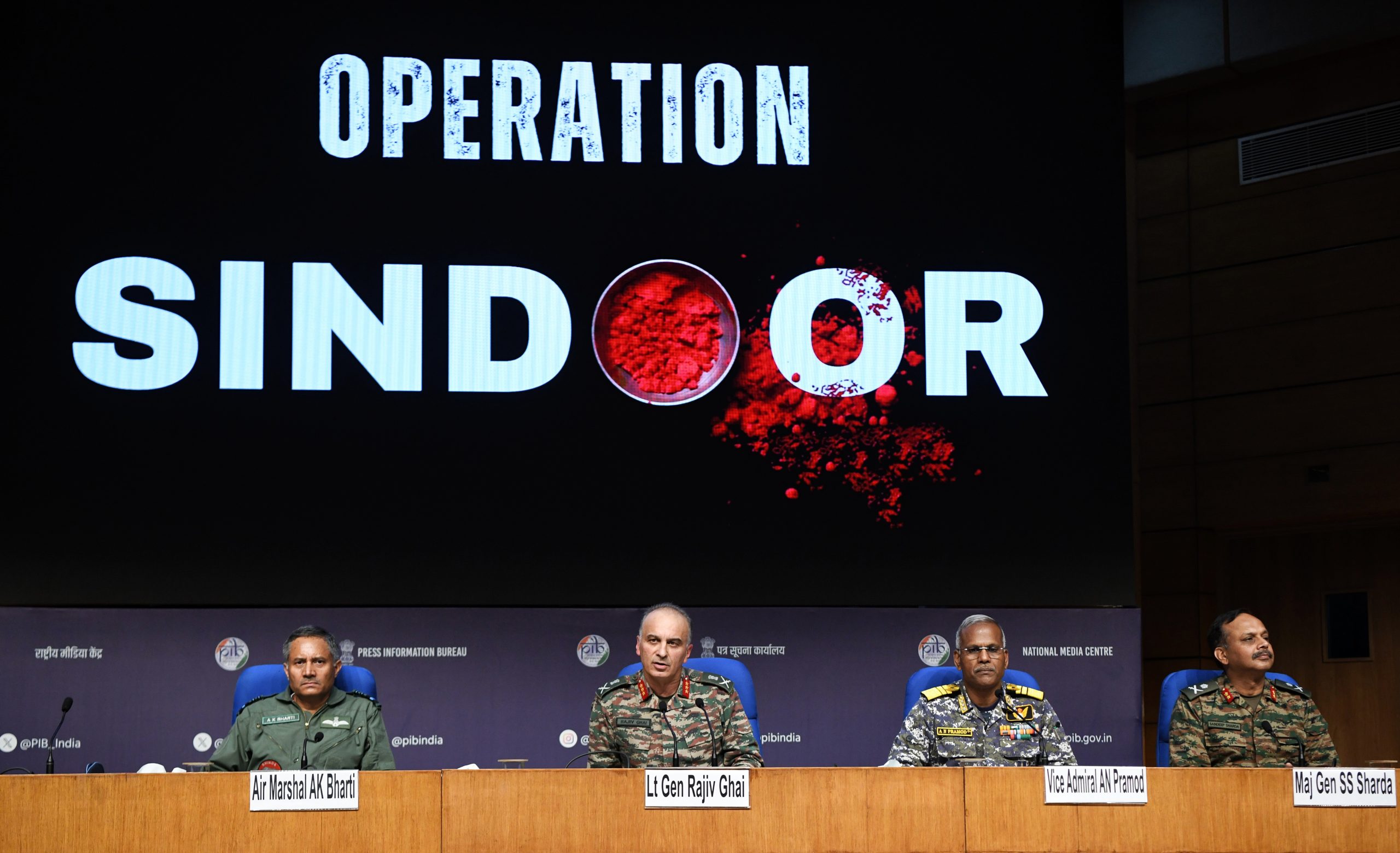
Then, as the world braced for total war between the nuclear-armed neighbours, US President Donald Trump announced a ceasefire, which he claimed had been mediated by the United States. Pakistan express gratitude to the US, even as India insisted the decision to halt fighting was made solely by the two neighbours without any third-party intervention. Since the announcement, both countries have held news conferences, presenting “evidence” of their “achievements”. On Monday, senior military officials in India and Pakistan spoke by phone, pledging to uphold the ceasefire in the coming days.
Internationalising Kashmir: Pakistan’s gain
The military standoff last week – like three of the four wars between India and Pakistan – had roots in the two countries’ dispute over the Kashmir region.Since then, India has argued that the Kashmir dispute – and other tensions between the neighbours – can only be settled bilaterally, without third-party intervention. Pakistan, however, has cited United Nations resolutions to call for the global community to play a role in pushing for a solution.
On Sunday, Trump said that the US was ready to help mediate a resolution to the Kashmir dispute. “I will work with you both to see if, after a thousand years, a solution can be arrived at, concerning Kashmir,” the US president posted on his Truth Social platform.
Highlighting ‘terrorism’: India’s gain
However, analysts also say the spiral in tensions last week, and its trigger in the form of the Pahalgam attack, helped India too. “Diplomatically, India succeeded in refocusing international attention on Pakistan-based militant groups, renewing calls for Islamabad to take meaningful action,” Ladwig said.
He referred to “the reputational cost [for Pakistan] of once again being associated with militant groups operating from its soil”. “While Islamabad denied involvement and called for neutral investigations, the burden of proof in international forums increasingly rests on Pakistan to demonstrate proactive counterterrorism efforts,” Ladwig added.
India has long accused Pakistan of financing, training and sheltering armed groups that support the secession of Kashmir from India. Pakistan insists it only provides diplomatic and moral support to Kashmir’s separatist movement.Simply put, India demonstrated greater reach than Pakistan did. It was the first time since the 1971 war between them that India had managed to hit Punjab. Launching a military response not just across the Line of Control, the two countries’ de-facto border in Kashmir, but deep into Pakistan had been India’s primary goal, said Ramchandran. And India achieved it.
Ladwig, too, said that India’s success in targeting Punjab represented a serious breach of Pakistan’s defensive posture.Both sides face constraints and opportunities that have emerged during the course of the last week, which, on balance, make a ceasefire a better outcome for them,” he said. Ladwig echoed that view, saying the truce reflects mutual interest in de-escalation, even if it does not resolve the tensions that led to the crisis.
“India has significantly changed the rules of the game in this episode. The Indian government seems to have completely dispensed with the game that allows Islamabad and Rawalpindi to claim plausible deniability regarding anti-Indian terrorist groups,” he said.
Source: Here
