
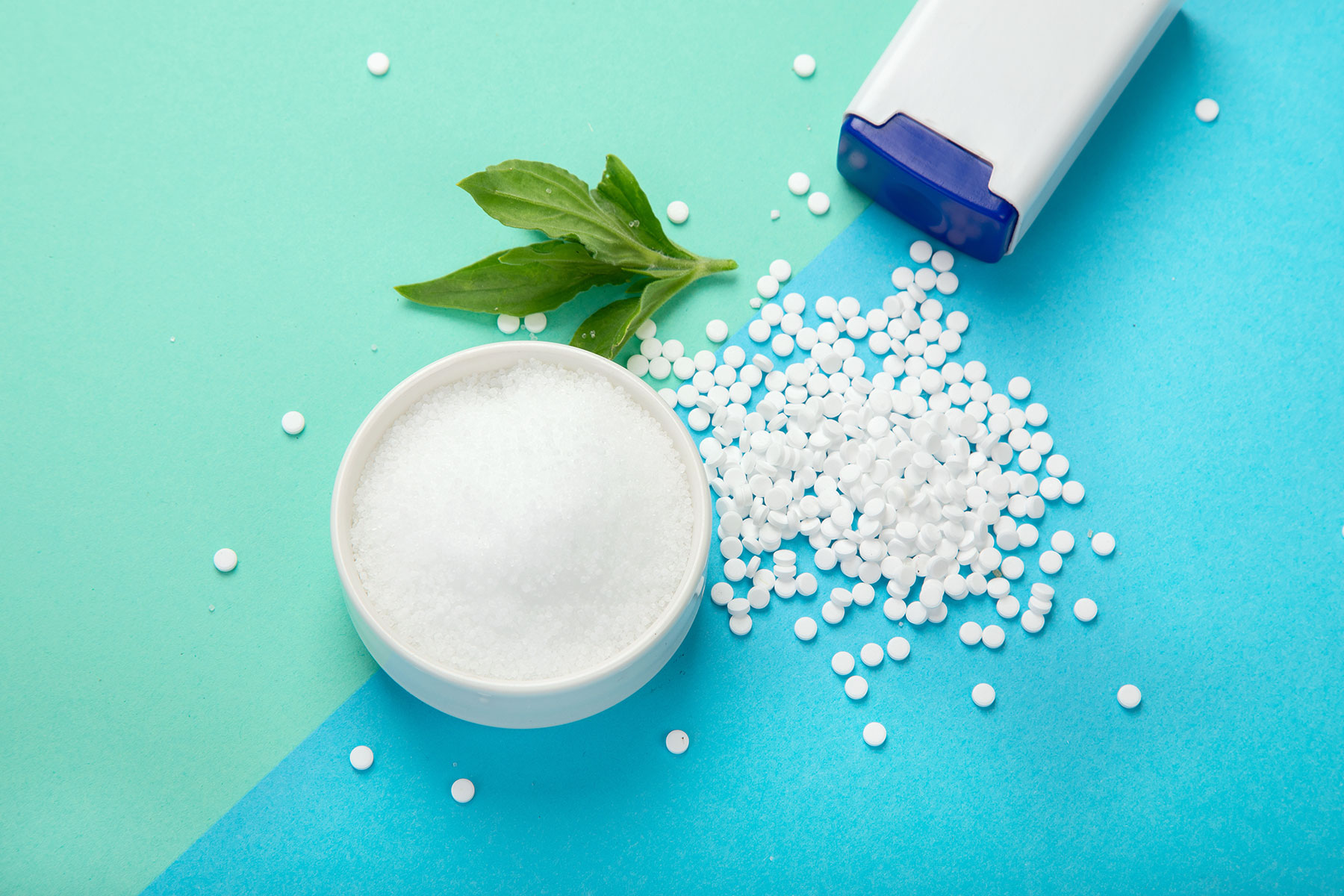
Artificial sweeteners come in many different names and forms — as liquids or powders, as sucralose, erythritol, aspartame, and more. They are consumed by millions of people around the world, and especially by people with diabetes.
The main reason behind the recommendation for people with diabetes to swap sugar for sugar alternatives is that the latter are believed to cause fewer blood sugar spikes.
The Food and Drug Administration (FDA) has also approved several artificial sweetenersTrusted Source, including saccharin, sucralose, and aspartame, as well as sugar alcohols like xylitol and erythritol, and plant-based sugar substitutes like stevia and monk fruit, as safe for consumption. Such research has stirred controversy and concern among the public, but does this mean people should stop consuming artificial sweeteners altogether? And what other possible effects could they have on health?
To discuss this and more, Claudia Suemoto, MD, PhD, senior author of the Neurology study, joined Medical News Today editors Yasemin Nicola Sakay and Maria Cohut on this episode of In Conversation, looking at artificial sweeteners’ effects on health, particularly the brain.
Suemoto is a physician and assistant professor of geriatrics at the University of São Paulo Medical School, where she is also an epidemiologist focused on dementia research and brain aging.
She is also currently one of the coordinators of the Brain Bank of the Brazilian Aging Brain Study Group — the largest brain bank in Latin America. In 2016, she was awarded the L’Oreal UNESCO For Women in Science in Brazil.
Source: Here
