
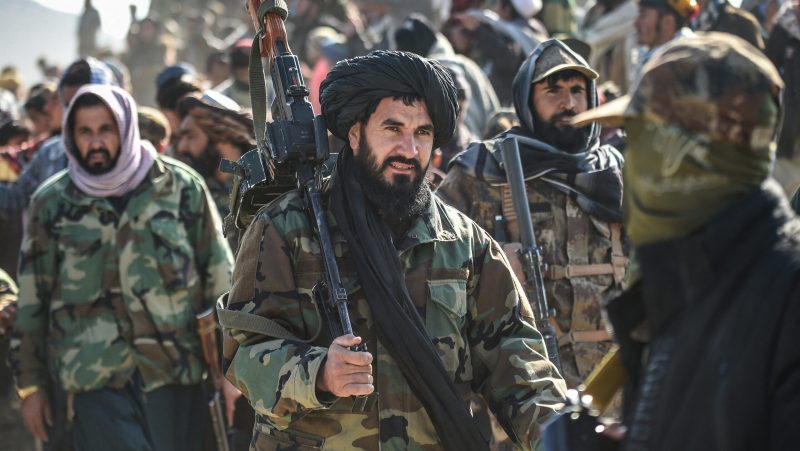
Afghanistan and Pakistan are fighting again, trading deadly shelling and mortar fire across their rugged border, with Pakistan’s defense minister saying his country’s patience had “run out” and declaring “open war” on its Taliban-run neighbor.
It’s the latest flare-up in an on-off conflict that pitches Pakistan’s well-funded, powerful and nuclear-armed military against hardened Afghan Taliban fighters with decades of battle experience – including victory over US and NATO forces in 2021 after years of insurgency.
Here’s what we know about the latest violence, which threatens to exacerbate instability in the region. Late Thursday night the Taliban’s military launched attacks on Pakistani positions along some sections of their porous and disputed border that wends 1,600-miles through rugged mountains and desert.
Kabul said those attacks were in retaliation for Pakistan’s bombing of what it said were militant camps in Afghanistan over the weekend that left at least 18 people dead. In response, early on Friday, Pakistan launched Ghazab Lil Haqq – or “Operation Righteous Fury.” Pakistani airstrikes had hit Kabul, the southeastern province of Paktia, and Kandahar, considered to be the spiritual birthplace of the Taliban where the group’s secretive leader Hibatullah Akhundzada is believed to be based .
A Kabul resident described the moment her family was woken up by a loud explosion on Friday.“I was terrified,” the woman, who CNN is not naming for safety reasons, said.“Then we heard gunfire. When we looked out of our apartment window, we saw bullet-like flames going up in the sky,” she said, adding she could not sleep and was still awake at 5 a.m., fearing what could happen next.
“Since the first explosion, the lights of most of the houses and apartments around us have been on,” the woman said. “I’m sure every Kabul resident is sitting in fear of being hit by a bomb.” The two sides have reported differing casualty figures for Friday’s attack. Pakistan claimed that its military had killed 133 Afghan Taliban fighters, while Afghanistan said eight of its soldiers had been killed. Last October, the two countries fought their deadliest conflict in years, with a fragile ceasefire in place since.
After the Afghan Taliban was ousted from power by NATO forces in 2001 for sheltering the perpetrators of the September 11 attacks, Pakistan became one of its main backers.
Its fighters found shelter over the border in Pakistan, and support for their subsequent insurgency against the US-backed Afghan government, in what became the US’ longest-ever war.
But since the Taliban’s ultimate victory in that war following the chaotic US withdrawal and their return to power in Kabul, Pakistan has faced a surge in Islamist violence.
Source: Here
