
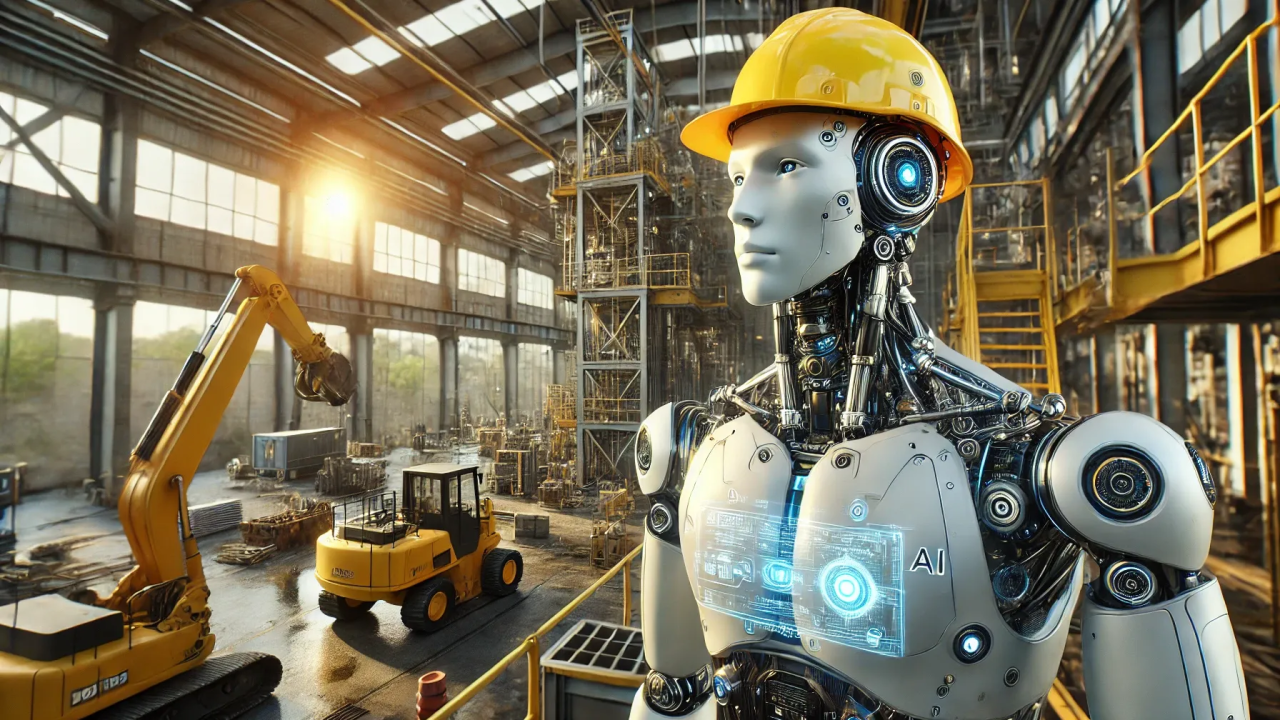
On May 1, much of the world celebrates International Workers’ Day, or May Day, honouring workers’ rights and the history of the labour movement. A public holiday in many countries, May Day has traditionally been stifled in the United States, a nation that has never been big on either international labour solidarity or workers’ rights.
The US and its tagalong to the north, Canada, instead celebrate their own exclusive Labour Day in September. But the origins of May Day lie in the US itself, where, on the first of May in the year 1886, mass strikes on behalf of an eight-hour workday broke out and were quickly met with deadly police repression. Nowadays, workers’ rights are under fire from another direction: artificial intelligence (AI), which threatens the very right of workers to, well, work.
In January, Amazon – the second-largest employer in the US after Walmart – moved to lay off 16,000 employees, the latest round of sweeping layoffs on account of AI. In October 2025, The New York Times reported that the company had plans “to replace more than half a million jobs with robots”.
The US presently leads the world in AI development – an unsurprising development given the country’s special relationship with die-hard capitalism and the idea that workers should perform like machines. What more logical next step than to replace them with machines altogether?
I, myself, generally try to avoid the US at all cost, having found it sufficiently creepy and alienating long prior to the AI takeover. On a recent trip to San Francisco, the world’s leading AI and tech hub, I found that the landscape had been rendered ever more dystopian by ubiquitous billboards and other signage pushing AI down everyone’s throats. In the end, AI is not only the culmination of longstanding corporate efforts to convert the Earth’s inhabitants into digitally addicted automatons. It is also the culmination of a lengthy corporate track record of worker oppression.
Just for the hell of it I googled “problems with AI” to see what the AI Overview response was. According to the answer I got, problems ranged from “immediate technical failures and ethical dilemmas to long-term societal and safety risks”.
As of early 2026, the overview specified, “key issues” included the “tendency to generate false information, perpetuate biases, and cause substantial environmental and data security risks”.
Of course, none of this has stopped the corporate plutocrats from betting on AI. On April 29, The New York Times revealed that, in just the first three months of this year, Google, Amazon, Meta and Microsoft had “plowed a total of $130.65 billion into capital expenditures, largely spending on data centers that power A.I.”
Source:Here
