
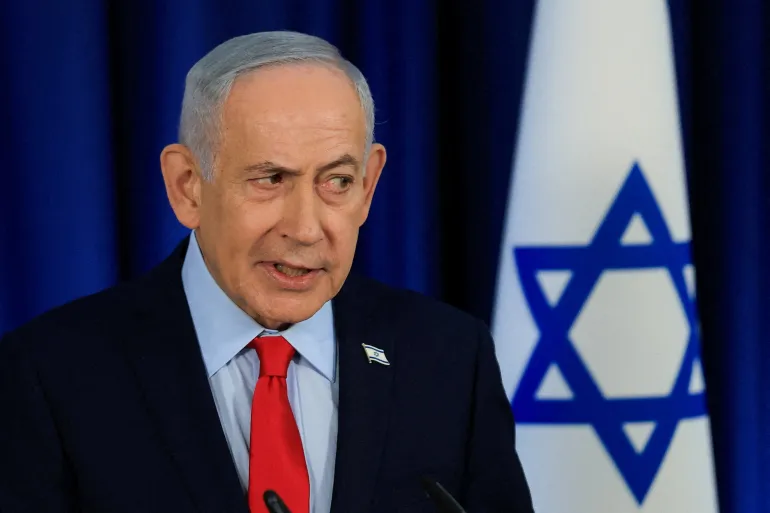
Three days earlier, The New York Times had reported that in January, Barnea presented US officials with a plan to induce a successful insurrection after regime decapitation was carried out. The Mossad chief would not have taken such messages to Washington without the approval of his prime minister.
The sense of crisis became more palpable when Israeli army chief Eyal Zamir warned the security cabinet that the military could “collapse in on itself”, particularly due to manpower shortages.
When the political and security echelons begin playing the blame game in the midst of a war, it is never a good sign. This is not where Israel anticipated the conversation would be one month after launching a joint attack with the United States against Iran.
When the war began, the prevailing sense in Israel was one of euphoria. Senior Israeli officials hailed the “unprecedented” and “historic” coordination with the US, including two meetings and 15 phone calls between Netanyahu and US President Donald Trump in the preceding two months.
Together, the Israeli and US armies unleashed a campaign of heavy bombardment, assassinating leading political, religious and military figures, and damaging and destroying security infrastructure, military industrial sites and missile launchers, as well as civilian and governance buildings, including oil depots and gasfields. Iran has responded with daily strikes against Israeli targets. It is hard to know the extent of damage on the Israeli side, given the strict censorship.
Certain strategic targets have been impacted in Israel, including the area of the nuclear reactor in Dimona, the Haifa oil refinery, and Ben Gurion airport. Beyond that, Israelis have spent four weeks running to bomb shelters and saferooms and have had to do so more frequently in recent days than in the early days of the war.
The economy has had to significantly hunker down; schools and most businesses have been closed, despite efforts on a number of occasions to reopen. Israel is certainly shaken, but it is not collapsing.
Simultaneously, among the public, the war remains very popular. The so-called Zionist opposition competes with the government in their enthusiasm for war and the extremity of measures being advocated.
And yet, uncomfortable questions are increasingly starting to percolate: are some of Israel’s assumptions about what could be achieved in a war involving the US being upended? Can Iran’s “mosaic” strategy not only survive, but deliver greater endurance and impose significant costs?
Judging by the nature of hits being absorbed by Israel, and the more impactful missiles being used, Iran’s capacity to continue retaliating has significantly exceeded expectations. Depletion of Israeli and US missile interceptor stocks is a growing concern. An additional front against Hezbollah in Lebanon has also opened for Israel.
Questions are being asked in relation to that conflict as well. Israel assumed that Hezbollah had been dealt a devastating blow in 2024, posing only a residual threat. The extent to which Hezbollah has been able to counter Israel’s operations with its own missile salvoes and its local resistance to Israeli ground operations has generated a palpable sense of frustration on the Israeli side. Tearful appeals to the government by local leaders in northern Israel to salvage the situation have gone viral.
Again, Israel’s capacity to destroy and do damage is unquestionable: one million Lebanese have been displaced, bridges linking the south of Lebanon to the rest of the country have been bombed out of use, and extensive damage has been wrought. But this is yet another military campaign with no clear endgame.
And these military adventures have followed in quick succession an Israeli campaign of death and destruction in Gaza, after which Hamas is still standing. While Gaza has landed Israel’s prime minister with a war crimes arrest warrant from the International Criminal Court, and a case to answer at the International Court of Justice for Genocide Convention violations, it did not produce any political vision beyond more war and zero-sum thinking.
Source: Here
