
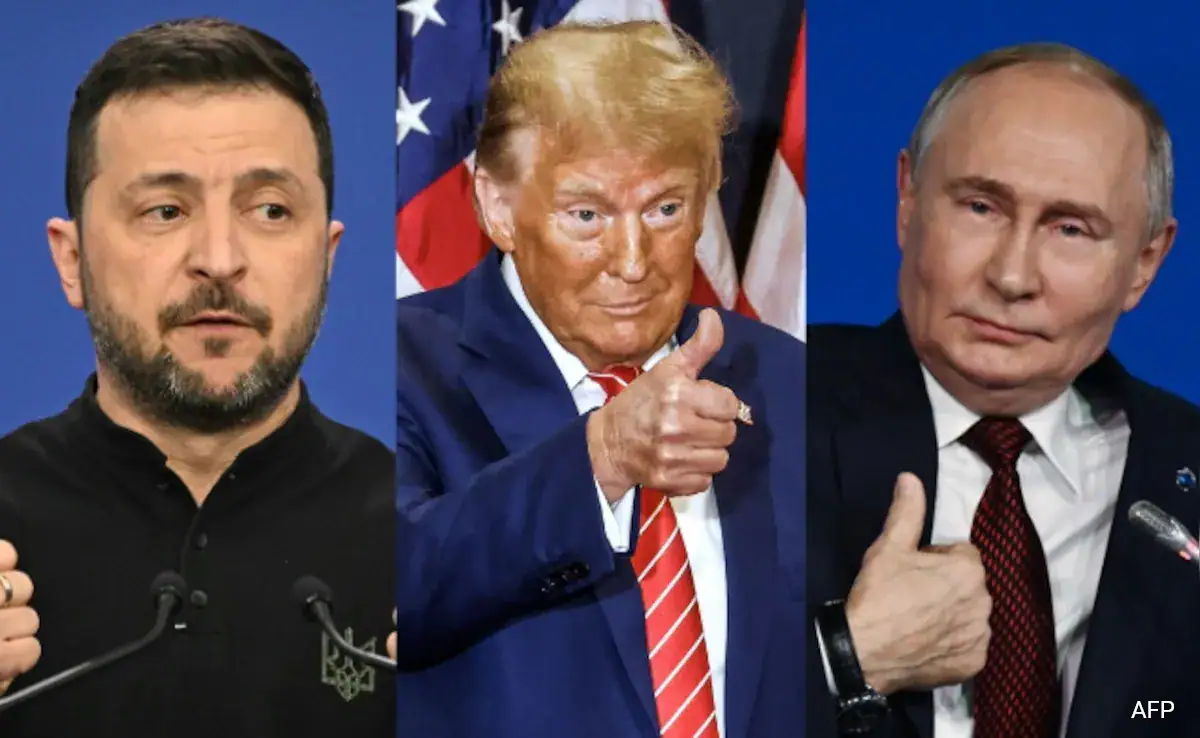
Europe’s leaders and officials have been blindsided by a staggering collapse in American support for Ukraine in the past week. Many still cannot understand why US President Donald Trump has turned so furiously on Ukraine’s leader, Volodymyr Zelensky, parroting the vitriolic disinformation usually heard from the Kremlin.
Leaders on the continent weren’t part of the Russia-US talks this week. They don’t know when the US will present a proposed peace deal to Kyiv, or make good on its threat to turn its back on the conflict. And they don’t know what will happen next. “The way in which this was delivered – blow after blow after blow, within days – that was a real shock” for the continent, said Armida van Rij, a senior research fellow and head of the Europe Programme at London-based think tank Chatham House.
European politicians are working through their grief. A frantic summit in Paris sparked a raft of hawkish new ideas, aimed at framing the contours of an uncertain new reality.
But still, key capitals are adrift in their aims. A peacekeeping force, hiked defense spending and new military aid have all been put forward, but never in chorus. Europe’s scattershot intentions formed one half of a stunning split-screen this week; on the other side were the US and Russia, suddenly chummy, tossing Ukrainian demands and territories off the negotiating table. Europe expected Trump to be less interested in Ukraine’s fight for sovereignty than the previous Biden administration, but it wasn’t primed for a break-up so sudden, unequivocal and bitter.
The sight of a sitting US president blaming an adversary’s invasion on its besieged ally was staggering, and drew unified condemnation from European leaders. On an emotional level, as well as a practical one, Europe has been shellshocked.
But it should not have been. For months, Trump and his inner circle had demurred and speculated over the start and hypothetical end of the war in Ukraine, and displayed an indifference to Kyiv’s sovereignty that signaled a jarring shift in policy was coming. UK Prime Minister Starmer made the first significant move to jostle European governments behind a common goal, announcing this week a marked shift in policy: Britain would be ready to put boots on the ground to keep an agreed peace in Ukraine.
Western officials said Wednesday that such a force would likely number fewer than 30,000 troops, and would focus on “reassurance,” securing key Ukrainian infrastructure and working to instill confidence in the state.
The officials said the effort is being led by Britain and France. Paris first mooted putting boots on the ground last year but was roundly rebuffed by Europe. But Starmer has made clear that an American “backstop” would be key; the officials said such a backstop would likely be focused around air power, and be controlled from a NATO country like Poland or Romania. Putting boots on the ground is not a universally popular idea. Importantly, Poland – which boasts NATO’s largest military in Europe and is a significant player in Ukraine – is reluctant, fearing it would make its own borders more vulnerable.
Should an informal, smaller European leadership group take shape, Polish Prime Minister Donald Tusk will likely expect to be involved. He will come to the table with uncomfortable truths for larger nations like Britain, France and Germany about the amount they are putting towards defense.
And Germany is in line for a particularly harsh dressing down. An inconveniently timed election on Sunday could result in weeks of haggling over its next government. The probably incoming chancellor, Friedrich Merz, used last week’s Munich Security Conference to set out a hawkish position on Ukraine.
Source: Here
