
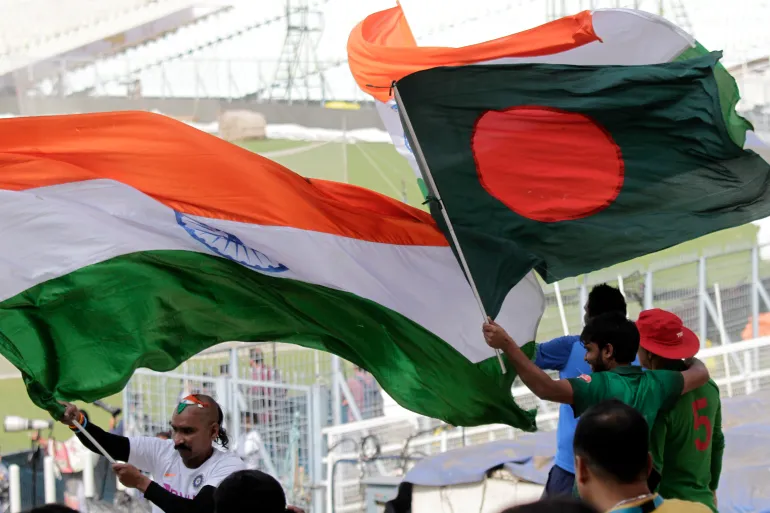
Indian Chief of Defence Staff Anil Chauhan delivered a pointed message at the Observer Research Foundation in New Delhi, raising alarms over a budding alignment of strategic interests between China, Pakistan and Bangladesh.
The general cautioned that such a trilateral convergence, if it gains traction, could have serious implications for India’s security and disrupt the regional balance of power. His remarks came in the wake of a widely circulated photograph from Kunming, China, showing diplomats from the three nations meeting during the inaugural trilateral talks held alongside regional economic forums. While the meeting was officially billed as a diplomatic engagement, the image has sent ripples through India’s strategic community.
Bangladesh, clearly aware of the sensitivities involved, has moved swiftly to contain the narrative. Touhid Hossain, foreign affairs adviser to Dhaka’s interim government, publicly disavowed any intention of joining bloc-based or adversarial alliances. Dhaka reiterated that its foreign policy remains firmly nonaligned and anchored in sovereign autonomy.
Despite these assurances, New Delhi’s strategic calculus appears to be shifting. There is now a growing perception in New Delhi that, under the interim leadership of Muhammad Yunus, Bangladesh may be recalibrating its foreign policy, moving away from the overt closeness seen under former Prime Minister Sheikh Hasina. Under Hasina, India and Bangladesh enjoyed unusually warm ties characterised by deep security cooperation, cross-border connectivity projects and shared regional objectives. Dhaka took strong action against anti-India insurgents, gave India access to transit routes through Bangladeshi territory and generally aligned itself with New Delhi’s strategic priorities.
Chauhan also drew attention to a broader, troubling pattern: External powers – chiefly China – are leveraging economic fragilities across the Indian Ocean region to deepen their influence. With countries such as Sri Lanka and Pakistan increasingly beholden to Chinese investment and aid, concerns are mounting that Beijing is systematically encircling India through soft-power entrenchment.
Bangladesh’s case, however, remains somewhat unique. Its economy, though under pressure, is relatively resilient, and Dhaka continues to emphasise pragmatic, interest-driven diplomacy over ideological alignment. The Kunming meeting, while symbolically charged, does not yet represent a formal strategic realignment.
Still, the formation of a trilateral framework marks a significant development. Unlike previous bilateral engagements, this format introduces a new dimension of coordination that could evolve in unpredictable ways.
Soure: Here
