
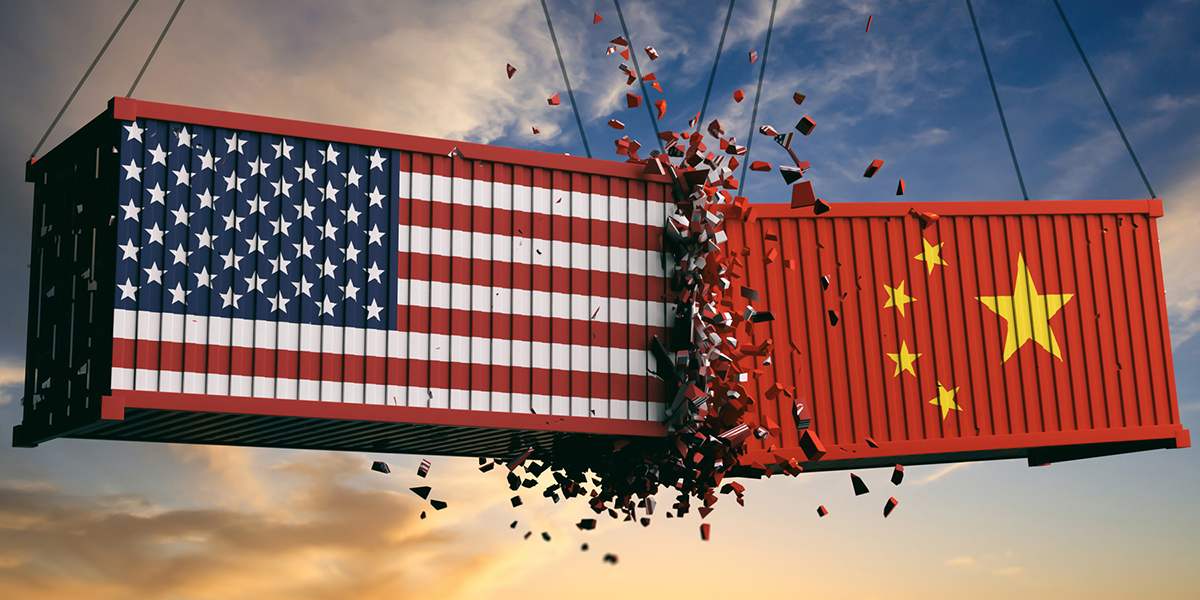
The United States and China have agreed on a framework to implement their trade truce, officials on both sides said Wednesday, after concluding two days of talks in London to defuse tensions and ease export restrictions that threaten to disrupt global manufacturing.
American and Chinese negotiators agreed “in principle” to a framework on how to implement the consensus reached by the previous round of talks in Geneva last month and a phone call between the two countries’ leaders last week, China’s trade negotiator Li Chenggang told reporters in London, according to Chinese state broadcaster CGTN.
Officials on both sides will now take the proposal back to their leaders for approval, US Commerce Secretary Howard Lutnick told reporters in a separate briefing in London, Reuters reported. “If that is approved, we will then implement the framework,” he said.
While neither side disclosed any specifics of the deal, Lutnick indicated that both had agreed to roll back export controls on goods and technologies that are crucial to the other. China’s restrictions on exports of rare earth minerals and magnets to the US will be resolved as a “fundamental” part of the framework agreement, Lutnick said, according to Reuters.
“Also, there were a number of measures the United States of America put on when those rare earths were not coming,” he added. “You should expect those to come off, sort of as President Trump said: ‘In a balanced way.’” It also highlighted Beijing’s powerful leverage from its dominance of the rare earth supply chain – and its growing readiness to wield it in pressing the US to ease export restrictions on China.
Rare earth minerals and their magnets are essential for everything from cars to fighter jets, and China holds a near-monopoly on these materials that are critical to American industries and defense. Following their long-anticipated phone call last week, Trump said Xi had agreed to restart the flow of rare earth minerals and magnets, though he did not elaborate on how fast that would happen or the volume of the materials that would be released.
Since early April, when Beijing imposed new licensing rules on certain minerals in response to Trump’s tariffs, China’s overseas shipments of rare earths have plunged, threatening industries globally, from electronics and defense to energy and carmaking.
Over the past month, Trump has imposed punitive measures on Beijing, including limits on technology sales to China and threatening to revoke the US visas of Chinese students, which was prompted by a belief that China had failed to live up to commitments it made in Geneva, administration officials told CNN in May.
The measures also include a ban on US companies selling to China software used to design semiconductors. The White House additionally warned US companies against using artificial intelligence chips made by China’s national tech champion Huawei. The moves have triggered backlash from China, which views Washington’s decisions as violating the Geneva consensus.
The US and China agreed in the Swiss city on May 12 to temporarily roll back crippling tariffs on each other and use a 90-day window to hash out a broader deal to address their trade imbalance. But despite the reprieve, China’s exports to the US suffered a steep decline of 34.5% in May, according to Chinese customs data, and the renewed friction necessitated another round of talks.
“The progress made during this round of talks in London is conducive to further building trust between China and the United States, promoting the stable and healthy development of China-US economic and trade relations,” Li, China’s top international trade negotiator and vice commerce minister, said Wednesday, CGTN reported.
Source: Here
