
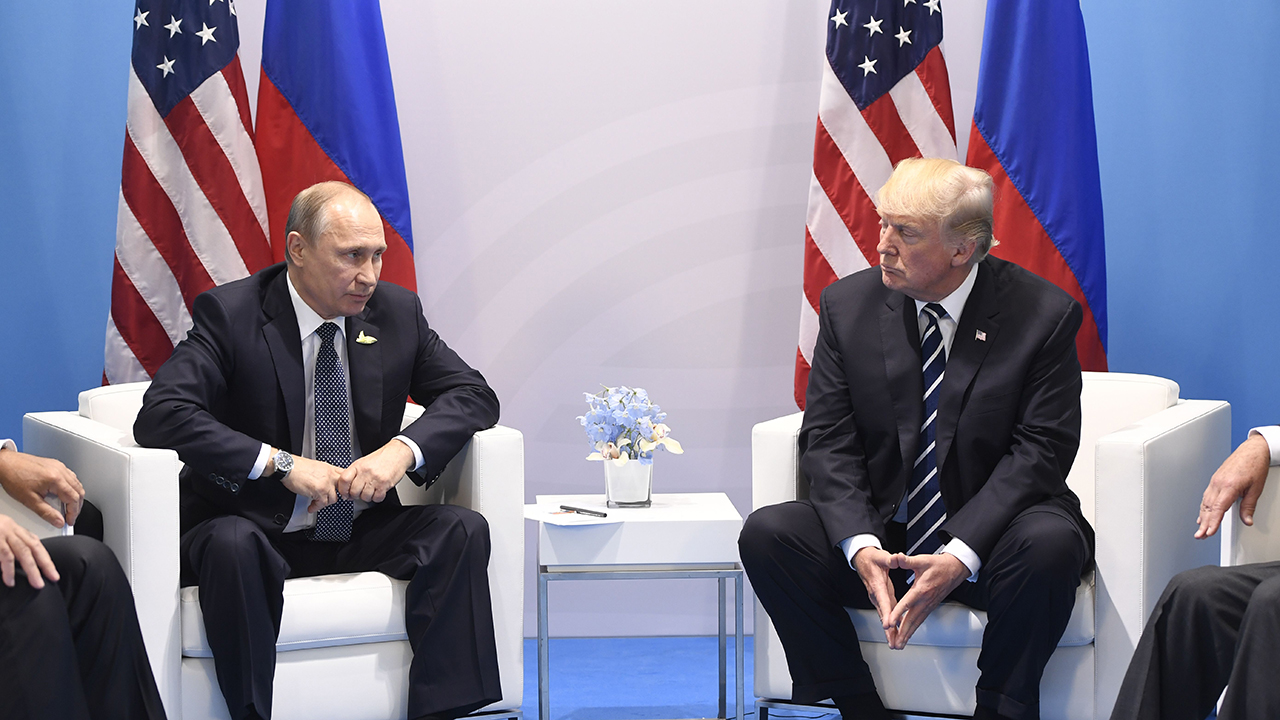
President Donald Trump seems to have learned the lesson painfully gleaned by all his 21st-century predecessors: You can’t reset US relations with Vladimir Putin.
Trump’s path from idolizing the Russian leader to berating him has been a melodrama of personalized geopolitics. But what happens next is far more important. The president’s epiphany offers new possibilities for Ukraine, Putin’s critics in Congress and America’s browbeaten allies. But it also comes with risk — most notably of a test of wills between alpha males Trump and Putin, who control the world’s two top nuclear arsenals.
Trump always tries to up the ante with foreign friends and foes with rhetoric and tariffs. But now he’s up against a ruthless adversary who raises the stakes not with bluster, but with human lives, as intensifying drone blitzes on Kyiv — a clear message to the White House — show.
Such is Trump’s transactional nature that it’s fair to ask how long his hostility toward his erstwhile friend in the Kremlin will last. And even though he’s talking about helping Ukraine defend itself, it’s hard to see his transformation extending to match the tens of billions of dollars in military and financial aid sent to Kyiv by the US Congress during the Biden administration.
However, the president told NBC News on Thursday that he has secured a deal through NATO to send new Patriot anti-missile missiles to Kyiv that it badly needs to repel Russian attacks on civilian targets. “We’re sending weapons to NATO, and NATO is paying for those weapons, a hundred percent,” the president said. “We’re going to be sending Patriots to NATO and then NATO will distribute that,” he added. The exact parameters of the deal were not immediately clear, and CNN has reached out to the alliance.
Trump seems to have reached a pivot point. He’s shifted from unfathomably blaming the victim of the war, Ukraine, to accusing the aggressor, Russia, of needlessly prolonging it. The question is, how does this change US policy on the war and on Russia, as well as Trump’s own attempts to exert US leadership and the domestic politics around Ukraine?
Read more here
